

The best wallpapers for high walls in old buildings
Love for old buildings is real: stucco, floorboards, high ceilings – and those beautiful, high walls that simultaneously trigger a little "How do I decorate with them?". This is precisely where wallpaper for old buildings can demonstrate its superpower: it balances proportions, emphasizes the architecture, and transforms a large wall area into a harmonious overall look – without you having to cover the entire room.
In this article I will show you specific design tips for high walls (3-4 meters are not uncommon), which patterns work particularly well in old apartments – and what interior designers recommend for historical rooms.
What would you like to discover?
- ➤ Why high walls in old buildings have a different effect
- ➤ Which wallpaper is suitable for old buildings and high walls?
- ➤ 7 design tricks for high ceilings
- ➤ From practice: Berlin old building
- ➤ Stucco, doors, windows: How to plan the design
- ➤ Room by room: hallway, living room, bedroom, home office
- ➤ FAQ: Measuring, assembly, substrate
- ➤ Quick overview: Most important tips
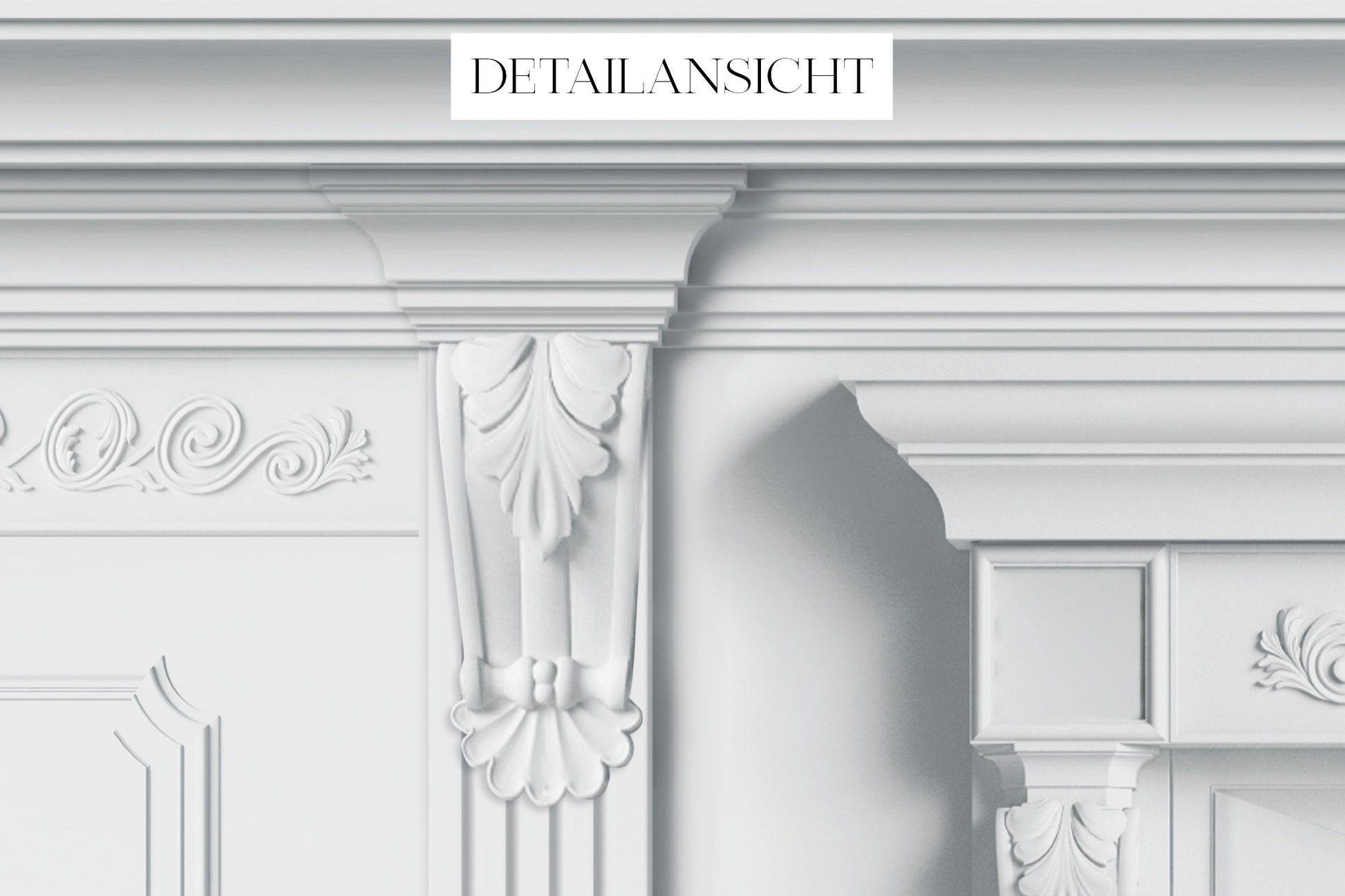
High walls love depth: architectural wallpapers with columns, frames and perspective make old buildings look instantly "finished" – without much decoration.
Why high walls in old buildings have a different effect
High walls are impressive – but they hardly forgive "too small" gestures. A small picture quickly gets lost, a tiny pattern can look cluttered, and sometimes the room feels somehow empty despite beautiful furniture. This is due to three things:
- Proportion: The higher the wall, the more important large surfaces, clear lines and calm zones become.
- Light: Old buildings often have large windows – strong light-dark contrasts can enhance patterns or cause them to "flicker".
- Architecture: Stucco, panel doors, arches – when wall design incorporates these elements, everything appears seamless.
Interior designers recommend consciously playing with proportions in historic rooms with high ceilings : either emphasizing the height with vertical elements or making it more inviting with horizontal divisions. This is precisely why wallpaper is so versatile in older buildings : it can do both – celebrate the height or deliberately break it up, create zones, and frame historic details in a modern way.
Which wallpaper is suitable for old buildings and high walls?
For high walls, the rule almost always applies: "think bigger." This doesn't mean everything has to be flashy – but rather that the motif, pattern repeat, and overall effect of the surface are appropriate for the ceiling height.
Large format & depth: Photo wallpapers with landscape, architecture or gentle gradients give high walls calm – and structure to the room.
Ornaments with an old-building vibe: Art Nouveau, vintage and classic frame motifs fit perfectly with stucco, floorboards and old building doors.
Vertical lines: Stripes or column-like motifs draw the eye upwards – perfect if you want to celebrate height.
Calm textures: Wiped looks, stone or cloud marble are the "quiet luxury" answer if you want to elegantly calm large wall surfaces.
Suitable wallpaper categories: Photo wallpapers , Architectural wallpapers , Abstract designs

Old building + ornamentation = perfect symbiosis. Looks particularly elegant with wood, brass and warm light.

If you want to leave plenty of space at the top: Frame ornaments decorate high walls without "filling" them.
7 design tricks for high ceilings (without creating an echo)
1) Think of the wall in zones
Instead of thinking of "a huge area" – think in terms of lower zone (furniture height), middle zone (viewing height), and upper zone (plasterwork/ceiling). Wallpaper looks particularly harmonious when the motif has its "main moment" in the middle area.
2) Large motifs instead of mini-records
High walls "swallow up" small patterns. Large landscapes, architectural perspectives, or soft textures give the room a sense of calm.

Large format softens high walls. A timeless alternative for understated old building backdrops.
3) Emphasize verticality – if you want to celebrate height
Stripes or column-like motifs draw the eye upwards. Tip: In very narrow rooms (like hallways in old buildings!), wider, hand-painted stripes often create a more relaxed atmosphere than super-fine lines.
4) Break up the height – if you want to make the room cozier
Sometimes you don't want to emphasize height, but rather warmth . In that case, horizontal elements can help: a colored lower zone (e.g., 110–130 cm), a narrow strip, or a calm wallpaper at the top. A wallpaper motif with a horizontal line (landscape/architecture) can also visually divide the wall.
5) Calm textures for "quiet luxury"
If you love a minimalist look: Wiped textures, stone and cloud structures give depth to large wall surfaces without being loud.
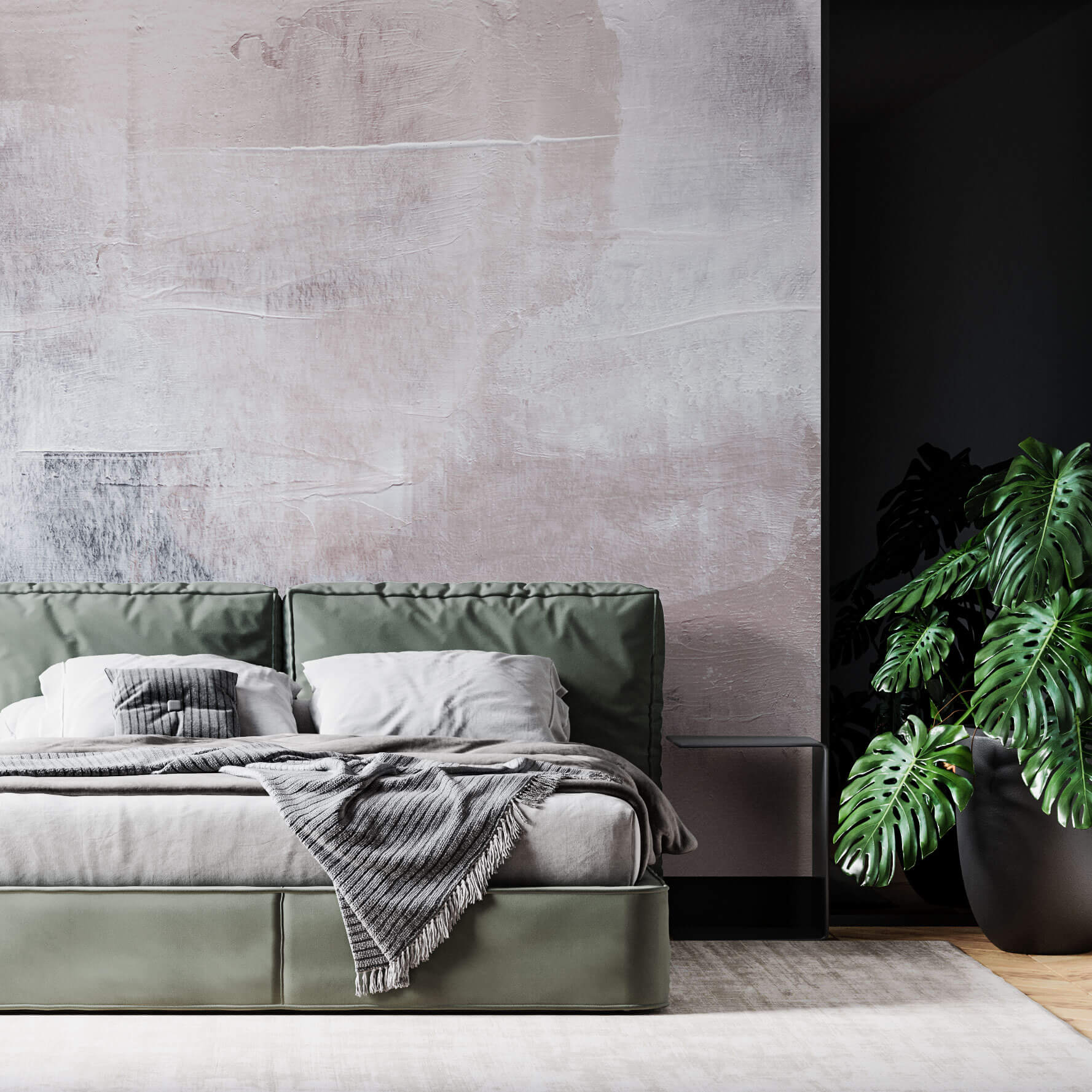
Large surface area, calming effect: Perfect if you want to make high walls appear more elegant and softer.
6) "Little decoration, but done right"
When it comes to wallpaper, the bolder the design, the less decoration you need. Opt for one or two large pictures or a long light fixture rather than many small elements. This will make an older building look sophisticated and less cluttered.
7) Test samples (really!)
High walls are highly sensitive to light. If you're unsure, order a material sample and look at it morning, noon, and night. This will save you so many "I wish I had..." moments.
Recommended wallpaper styles for old buildings: Architectural wallpapers · Marble & stone · Natural wallpapers · Order material samples
From practice: Berlin old building living room
Project: 3.40m high walls in Prenzlauer Berg
Challenge: "The wall behind the sofa always seemed kind of empty, but we didn't want to hang up large pictures."
Solution: Architectural wallpaper with a classic stucco frame motif as an accent wall. The motif was adapted so that the main element sits at sofa edge height – the upper area fades out smoothly.
Feedback: "The room now looks complete and elegant without us having to decorate much. The wallpaper makes the height a statement, instead of overwhelming us."
— Customer from Berlin, verified review
Stucco, doors, windows: How to plan the design
Old buildings rarely have "a perfect rectangular wall without anything on it". That's why planning is invaluable here:
- Windows & Doors: Measure the entire wall surface (windows/doors will be cut out later). When ordering, round the measurements up to the nearest 10 cm – this gives you enough leeway when wallpapering.
- Stucco & moldings: You usually omit baseboards when measuring the height (measure the full wall height at its highest point). You can deliberately incorporate stucco: a more subtle design at the top, a bolder motif in the middle.
- Motif position: With custom-made wallpapers, the motif and cut can be adjusted free of charge – even to windows, doors, slopes or furniture, so that nothing looks awkwardly cut off.
If you like: Briefly write down your wall dimensions and send a photo – then we can tell you exactly which design is most harmonious for your old building wall.
Room by room: hallway, living room, bedroom, home office
Hallway & Entrance Hall (Classic of Old Buildings)
The hallway is often narrow, high, and has many doors. Two things work particularly well here:
- Calm textures (so it doesn't become distracting)
- Targeted accents instead of a full-surface pattern – e.g., wallpaper circles as a gallery (mega practical for many door frames!)
More ideas: Wallpaper for hallways & entryways · Wallpaper circles
Living room (statement without clutter)
Wallpaper can be a "supportive" element in the living room.
- Architecture for Depth & Elegance
- Landscape as a tranquil stage
- Ornaments as an upgrade for old buildings
Tip: Place the accent wall behind the sofa or dining table – this way the motif acts like a "frame" for the room.
Popular styles: Living room wallpapers · Photo wallpapers
Bedroom (soften the height)
The bedroom should be a place of peace and quiet. If your bedroom in an older building has high ceilings, soft textures and light patterns will create a particularly pleasant atmosphere. Combine these with linen, warm wood, and matte surfaces – and you've got that "hotel-but-home" look.
Calm options: bedroom wallpapers
Home office (focus instead of distractions)
In the workplace, structured, calm wallpapers work particularly well – they add depth to video calls without causing stress in everyday life.
Professional backgrounds: Wallpapers for the office & home office
FAQ: Measuring, assembly, substrate (brief & practical)
- How do I measure high walls? Measure the width and height at the widest/highest point and round up to the nearest 10 cm. Windows and doors are ignored in the measurement.
- What if the wall isn't perfectly smooth? For a clean finish, the surface should be clean, dry, and as smooth as possible. If you're unsure, a personal consultation can help – together we can determine the best approach.
- Is installation difficult at a height of 3-4 meters? It's much easier with a stable ladder/work platform and a second person. Professional non-woven wallpapers come in pre-cut, numbered strips – the wall is pasted (no pasting table needed) and the wallpaper is applied strip by strip.
- Can I redecorate later? Yes – non-woven wallpapers can usually be peeled off dry in strips (ideal if you redecorate often or move house).
🏛️ Quick overview: Old building wallpaper & high ceilings
What almost always works
- Large-format motifs (landscape, architecture, smooth gradients)
- Ornaments (Art Nouveau/Vintage) as an upgrade for old buildings
- Calm textures (wiped look, stone, marble) for "quiet luxury"
Design tricks for high ceilings
- Plan the wall into zones (bottom/middle/top)
- Vertical lines = emphasize height
- Horizon/Division = Make height more comfortable
- Less decoration, but bigger
Quality & Service (especially practical for older buildings)
- Custom-made – design/cut will be adjusted free of charge (also for windows/doors)
- Numbered, pre-cut strips – paste the wall and get started!
- High-quality non-woven fabric (180 g/m²), durable, colorfast, wipeable with a damp cloth
- Free from PVC, plasticizers & solvents – for a pleasant room atmosphere
- Made in Germany (Design & Production in Berlin)
- Trust: 4.89/5.0 from 290+ verified customer reviews
Quickly find the right categories
If you send photos of your wall and a rough description of your style (calm, elegant, playful, modern), you can receive help with the selection and best motif design for your old apartment: for personal consultation .